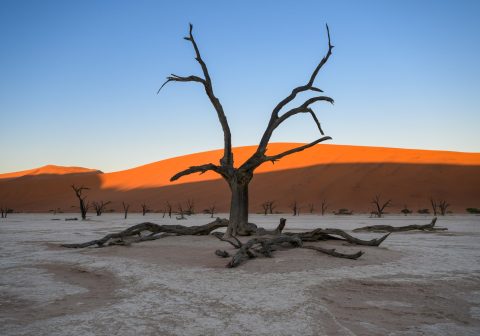
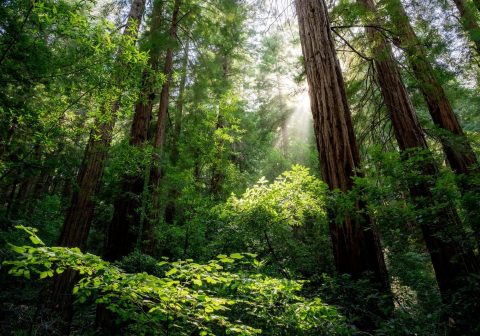
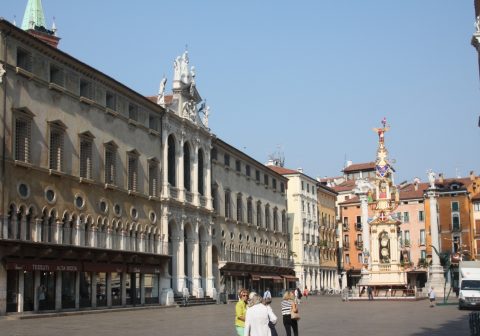
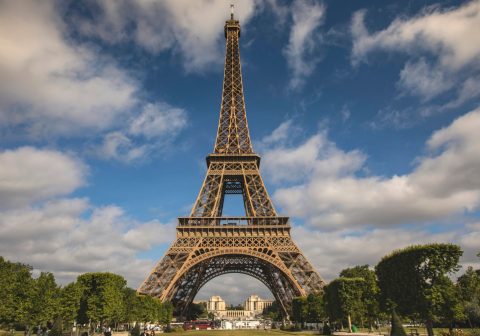
Start by sorting: put the edge pieces on one side and group the others by color. Build the frame, then assemble the easiest areas, the ones with strong colors or clear details. Finish with the plain areas such as the sky or the sea, trying the pieces one by one by their shape.
The method in five steps
Look at the picture. Spot the big areas: sky, water, trees, a house, a face. They will be your landmarks.
Sort the pieces. Edges on one side, the rest grouped by color.
Build the frame. The four corners first, then the edges. You now know the size of the puzzle.
Assemble the easy areas. A red roof, a sign with letters, a flower: anything that is easy to recognize.
Finish with the plain areas. Sky, sea, grass. Here the shape of the piece matters more than its color.
How to go faster
Champions all say the same thing: time spent sorting is never lost. Do not stay stuck on one piece. If it does not fit after a few tries, put it aside and pick another one.
Work on one small area at a time and join the areas together at the end. And change your point of view: looking at the whole picture again often shows where a piece belongs. To see what these habits look like in a contest, read are there jigsaw puzzle competitions?
Online, the same method works
On jigsawday.com the pieces are already face up, which saves the first ten minutes of a cardboard puzzle. The “Preview” button shows the full picture whenever you need it, and “Hint” points out two pieces that fit together.
If you are just starting, choose 24 or 48 pieces: see our easy jigsaw puzzles. When it becomes too simple, add pieces little by little.
Sorting without getting lost
Good sorting saves more time than anything else. On a screen, use the empty space around the picture as your table: drag the edge pieces to one side, then make small groups by color. You do not need perfect piles. Three or four rough families are enough: dark, light, bright colors, and the pieces you cannot place yet.
As you move forward, go back to your groups often. A piece that looked impossible at the start becomes obvious once its neighbors are in place. That is why it pays to move on when you are stuck, rather than try the same piece again and again.
How to tackle the hard areas
Sooner or later, every puzzle comes down to a sky, a sea or a field where all the pieces look alike. Do not despair: here the method changes.
Compare the shades. A sky is rarely one color: it is often darker at the top and lighter near the horizon. Line the pieces up from dark to light.
Follow the small details. A thin cloud, a ripple or a leaf can continue from one piece to the next.
Look at the shapes. Sort the pieces by the number of knobs and holes, then try them in order along the part that is already built.
Work from what is done. Always build outward from a finished edge, so that each new piece has two sides to check against.
Common mistakes to avoid
Choosing too many pieces too soon. It is more satisfying to finish a small puzzle than to give up on a large one. Add pieces gradually.
Forcing a piece. If it does not click into place, it is not the right spot.
Starting with the sky because it is big. Keep it for the end, when few pieces remain and the choice is easier.
Never looking at the whole picture. Step back from time to time: you will often see at once where a piece belongs.
Wanting to finish in one sitting. A long puzzle is better over several sessions. Your game is saved, and fresh eyes find pieces faster.
It is the easiest way for most pictures, because edge pieces are quick to recognize. If the border is a single color, start with the most detailed part of the picture and build the frame later.
How many pieces should a beginner choose?
An adult beginner is comfortable with 48 to 100 pieces. A puzzle should stay a pleasure: it is better to finish a small one than to give up on a big one.